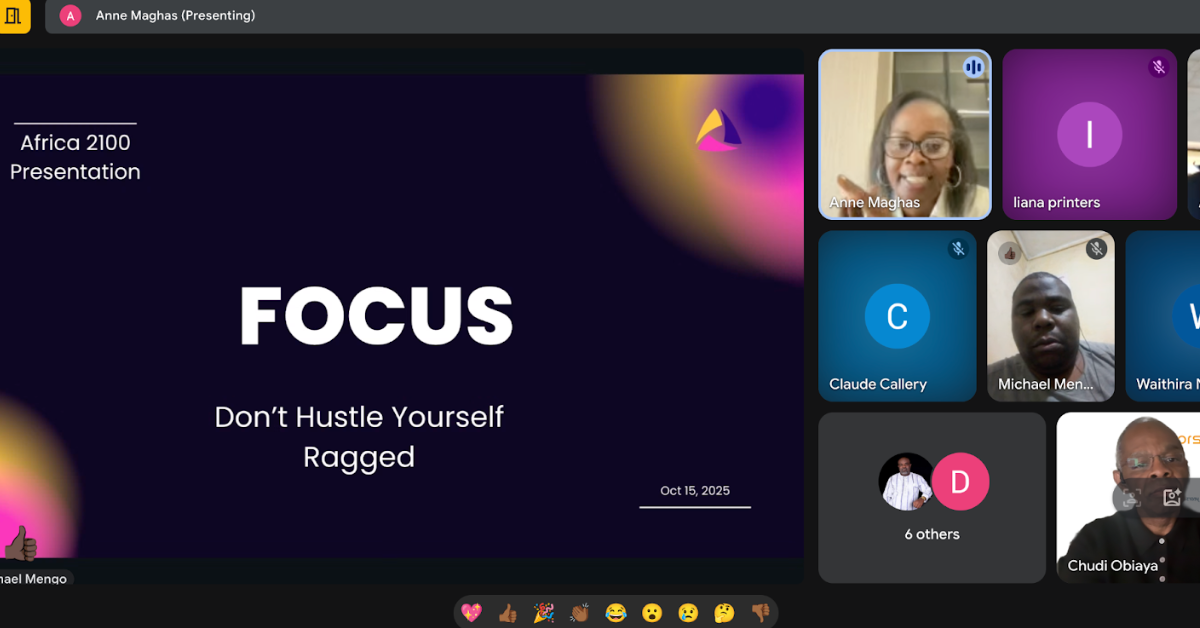


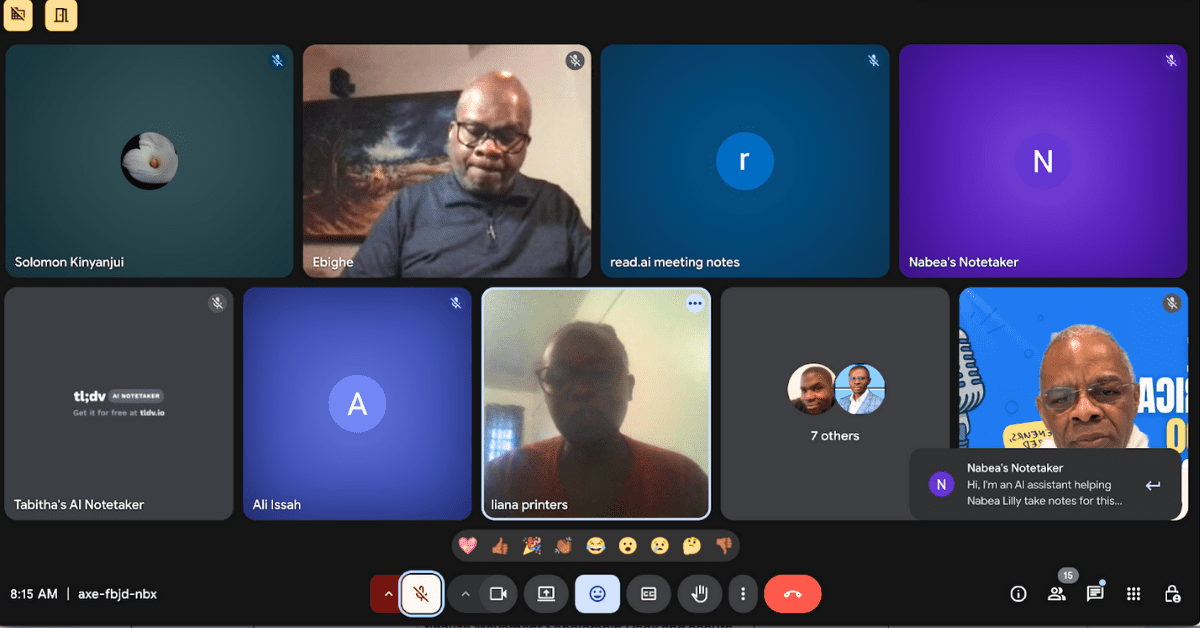
One of the defining traits of great founders is their willingness to learn and continuously strengthen the organizations they’re building. That spirit was on full display during our recent Africa 2100 Masterclass Workshop, led by global HR and organizational development expert Ebighe Emafo. The session—centered on Building High-Performing Teams for Exceptional Service—was deeply practical, human, and filled with wisdom for anyone working to grow a venture and lead people.
Our peer and community member, Lillian Nabea, CEO of Liana Printers in Kenya, opened the discussion by vulnerably sharing her journey. She spoke about her passion for excellent service, the challenges of running multiple shop locations, and her current restructuring efforts after pausing staff employment to redesign her organizational approach. It was a fitting real-world use case for a session dedicated to people, culture, and building systems that unlock performance.
Why People & Culture Matter: More Than Just HR
Ebighe began by grounding the conversation in something many founders overlook: people and culture are not “nice to have”—they are central to long-term success. Drawing from his experience working across continents with 100-year-old global organizations, he noted that strategies, products, and markets evolve, but culture and values create the durability that sustains companies over decades.
Research supports this:
High-performing organizations deliberately invest in their people systems, leadership behaviors, and cultural foundations, especially during growth and transformation phases.
For early-stage founders, this means the right time to cultivate culture is before the team becomes large—not after problems emerge.
The Power of Values (When They’re Real, Not Just Words)
Lillian shared the values that guide her business—integrity, transparency, and trust—and her intent to treat employees as equals and create a non-toxic environment. Ebighe affirmed these as powerful choices, but issued an important caution:
Values only matter if they are translated into clear behaviors that everyone understands and lives by.
For example:
- What does transparency look like in action?
- How should someone behave when a mistake happens?
- What consequences occur when values are ignored?
- How do leaders role-model the standards?
When values aren’t reinforced by visible behaviors, expectations, and systems, they get reduced to “statements on a wall.”
Mistakes, Culture, and Innovation
One of the most referenced insights from the session was the distinction between organizations that learn from mistakes versus those that punish mistakes.
A culture of fear leads to silence, stagnation, and innovation paralysis. Ebighe illustrated this through a behavioral research example showing how teams can become conditioned to avoid initiative—even after the original threat is gone—simply because fear was normalized.
His recommendation to founders:
- Treat mistakes as learning opportunities.
- Reward openness and accountability.
- Invest time in coaching before you reach for punitive measures.
- Maintain high standards, but build psychological safety.
Performance Systems: Clarity Over Guesswork
A recurring challenge for many founders is how to evaluate performance objectively, especially in small teams. Ebighe’s advice was straightforward:
- Set clear performance expectations for the organization.
- Cascade them down to each employee’s role.
- Conduct ongoing check-ins, not just end-of-year surprises.
- Diagnose underperformance with empathy:
- Is there a knowledge gap?
- Are they in the wrong role?
- Or are they in the wrong organization?
When systems are clear, consequences are predictable, and discussions are transparent, even difficult outcomes—like letting someone go—can happen with fairness and dignity.
Hiring or Partnering? Look Beyond CVs
When asked about selecting co-founders or first hires, Ebighe shared a simple but powerful framework:
Evaluate three core pillars:
- Expertise – What technical capability is required?
- Experience – Has the person operated in environments similar to yours?
- Character – Do their behaviors reflect your organization’s values under pressure?
Experience and skills can be easily overstated—but character always reveals itself in real scenarios.
This is why situational questioning, probing for real past decisions, and diligent referencing matter.
Culture is Built, Not Accidental
From the conversation, one takeaway stood tallest:
Leaders create culture by what they reward, what they tolerate, and what they model.
Founders must decide early:
- What do we stand for?
- What behaviors are expected here?
- What’s non-negotiable?
- How do we make our values visible?
When those answers are clear and reinforced, exceptional teams—and exceptional service—naturally follow.
A Community Built to Grow Together
The genius of this session wasn’t just Ebighe’s expertise—it was the courage of founders like Lillian who opened their real challenges, inviting shared learning.
In Africa 2100, we believe that our community becomes stronger when we learn together, ask hard questions, and commit to building ventures grounded not just in profit, but in purpose, dignity, and people-centered leadership.
As our ventures grow, so must the cultures behind them.
To every founder:
Your people systems aren’t secondary. They are the backbone of your business.
And to Ebighe:
Thank you for pouring into us so generously.
🟣 Join Our Next Masterclass
Africa 2100 hosts monthly tactical sessions to help founders troubleshoot real operational, leadership, and business design challenges. Stay tuned for the next announcement!